
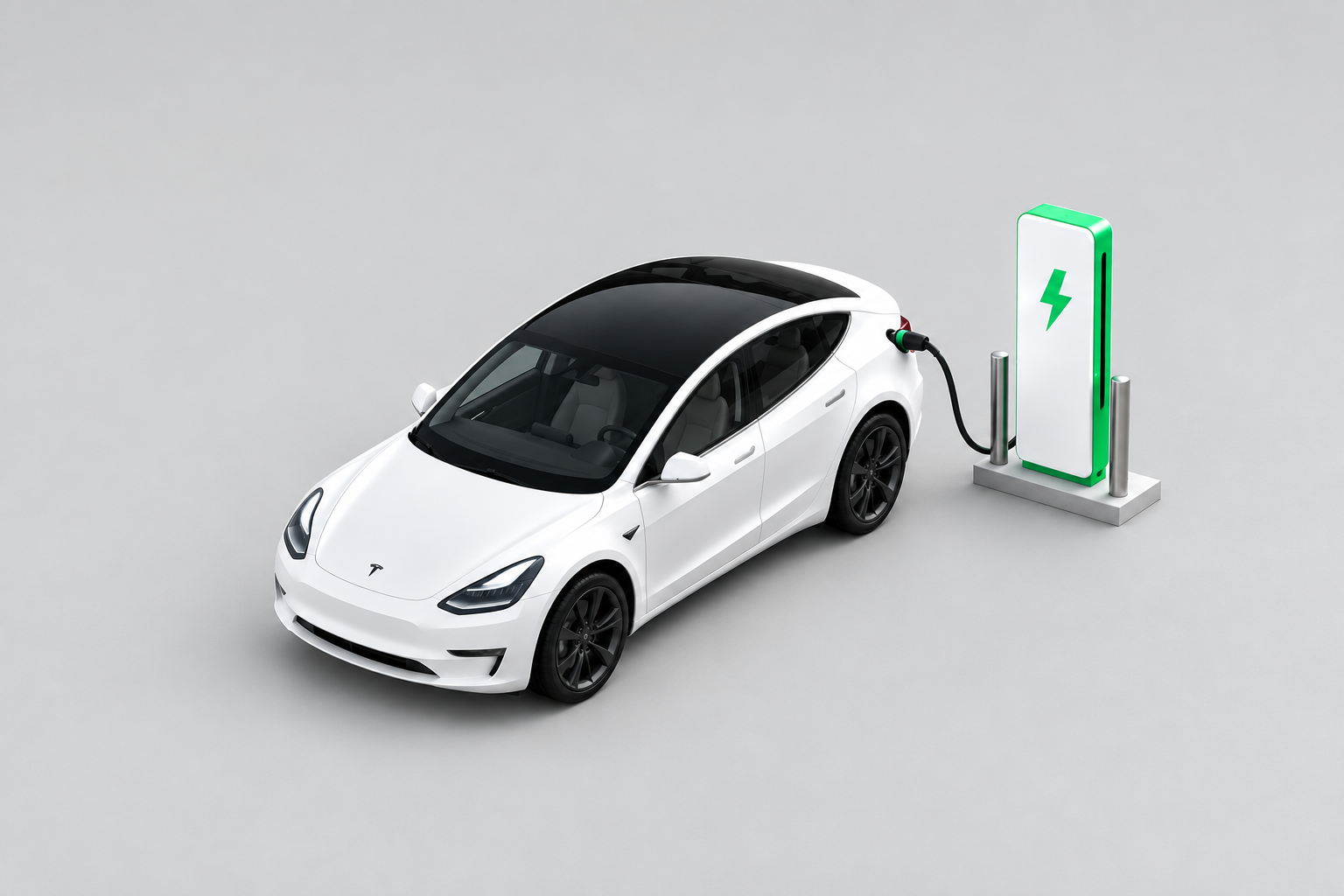

Understanding EV battery technology is essential for any electric vehicle owner, but navigating the complexities of degradation and repair costs shouldn’t be a solo journey.
At EV Reviver, we leverage deep technical expertise to demystify electric car battery life expectancy and provide transparent, data-driven diagnostics. Whether you are troubleshooting a specific range issue or exploring long-term maintenance strategies, our team is dedicated to keeping your vehicle on the road longer. Contact EV Reviver today to schedule a diagnostic evaluation and ensure your battery is performing at its peak.
To manage an electric vehicle’s health, one must first grasp the critical distinction between standard automotive electronics and the high-voltage systems that define modern EV battery technology.
The Anatomy of an EV Battery: Traction Packs and BMS Performance
A traction battery is a high-voltage rechargeable pack — typically ranging from 200V to 800V — that delivers sustained electrical energy to power the electric motor. This is fundamentally different from the standard 12V lead-acid starter battery found in internal combustion engine (ICE) vehicles, which exists solely to crank the engine and run low-voltage accessories. Traction batteries store and discharge far greater amounts of energy under demanding, continuous load conditions.
Before you can evaluate any EV battery system, three core concepts matter:
- Voltage (V): Determines the electrical potential of the pack and directly affects motor performance.
- Capacity (kWh): Measures how much energy the pack stores — the primary driver of driving range.
- Energy density: How much energy a pack stores relative to its weight or volume, which shapes vehicle design trade-offs.
The Battery Management System (BMS) sits at the center of it all. It monitors cell voltage, temperature, and charge state continuously, balancing individual cells and triggering protective fault codes when it detects unsafe conditions. According to the Alternative Fuels Data Center, the BMS is essential for maintaining both safety and long-term cell health. It’s not optional hardware — it’s the intelligence that keeps a high-voltage pack from becoming a hazard.
With these fundamentals established, the next logical question is what materials actually make up the cells inside. This leads to the critical differences between today’s dominant battery chemistries.
Comparing Primary Battery Chemistries: Lithium-Ion vs. LFP
The chemistry inside an EV battery pack determines everything from range to safety to long-term cost — and not all chemistries make the same tradeoffs.
Lithium-ion (NMC/NCA) remains the dominant choice for performance-focused EVs. As a lithium-ion battery for electric vehicles, NMC (nickel manganese cobalt) and NCA (nickel cobalt aluminum) chemistries deliver high energy density, making them well-suited for long-range applications. The tradeoff? They run hotter and cost more to produce.
Lithium Iron Phosphate (LFP), on the other hand, trades some energy density for significantly better thermal stability and a lower price point. LFP cells are increasingly common in entry-level EVs and energy storage systems — they’re harder to push into thermal runaway, and they tolerate frequent full charges better than NMC cells do.
Solid-state batteries represent the next frontier. They replace liquid electrolyte with a solid medium, which promises faster charging and improved safety. But manufacturing challenges keep them from reaching scale today.
Cell form factor matters, too. The 18650 and 2170 cylindrical cells remain industry-standard building blocks for battery modules, balancing energy output, thermal management, and production efficiency in ways that newer formats haven’t yet displaced. The specific specifications of those modules — voltage, capacity, integration — are where the real engineering decisions live, which the next section explores.
Technical Specifications and Industry Examples
Understanding real-world module specifications is what separates theoretical EV knowledge from practical decisions — whether you’re evaluating electric car battery life expectancy or planning a custom power build.
Tesla Model S Modules. The 5.3 kWh Tesla Model S module operating at 22.8V is one of the most studied units in the DIY and secondary-market space. Its relatively compact form factor and well-documented cell architecture make it a popular choice for custom off-grid power systems and EV conversions. Because these modules come from a well-engineered thermal management system, builders know exactly what they’re working with — and what failure modes to watch for.
LG Chem Pacifica Modules. The LG Chem 60.8V Pacifica module tells a different story. Designed for plug-in hybrid duty cycles, it operates at a higher nominal voltage and surfaces frequently in secondary markets as retired Chrysler Pacifica minivans reach end-of-life. According to the Alternative Fuels Data Center, module voltage architecture directly shapes integration complexity — and the Pacifica unit’s voltage range creates specific matching challenges for custom builds.
400V vs. 800V Architecture. Voltage architecture is the spec that affects charging speed more than almost anything else. Most EVs on the road today use a 400V system — functional, proven, and well-supported by existing charging infrastructure. But 800V platforms, now appearing in newer vehicles, cut DC fast-charging times dramatically by pushing more power through the same connector. However, 800V charging requires compatible hardware on both the vehicle and the charger side, which limits practical availability today. With those specifications in mind, the next logical question becomes cost — which leads to the economics of EV batteries.
The Economics of EV Batteries: Costs and Secondary Markets
EV battery costs have dropped dramatically over the past decade, but replacement expenses still represent one of the most significant financial decisions an EV owner can face.
New vs. Repurposed Module Pricing
Pack-level replacement costs typically range from $5,000 to $20,000 depending on vehicle make, capacity, and labor, according to AAA. On a per-kWh basis, new modules generally fall between $100 and $150, while repurposed modules pulled from retired vehicles can cost 40–60% less. That gap is why secondary markets have grown quickly among budget-conscious builders and off-grid energy enthusiasts.
The Repurposed Battery Market
Retired EV modules don’t disappear — they move into second-life applications. A common pattern is deploying used packs in off-grid solar storage systems or DIY EV conversions, where absolute capacity matters less than upfront cost. These modules retain enough usable capacity to deliver real value outside automotive use. And as pack volumes increase globally, that secondary supply is only growing.
What Actually Drives Replacement Costs
Beyond the modules themselves, three factors push total costs higher: labor (disassembly is time-intensive), cooling system reintegration (thermal management hardware must be pressure-tested and reconnected correctly), and core charges (some suppliers require return of the old pack). Overlooking any one of these can blow a budget fast.
Finding Reliable Specifications
Safe installation depends on accurate documentation. Manufacturer service portals, owner communities, and OEM technical bulletins are the most reliable sources for module dimensions, voltage ratings, and connector pinouts — especially when sourcing repurposed hardware. Emerging chemistries like the solid-state EV battery will bring new specification requirements as they reach production, so staying current with documentation matters.
Understanding costs is just one aspect. What happens when the battery management system itself throws a fault? This is where diagnostic codes become essential.
Safety Alerts and Diagnostic Fault Code Guidance
BMS fault codes aren’t random error messages — they’re a structured warning system designed to protect your EV battery from irreversible damage.
Understanding the prefix system is the logical starting point. Alert codes follow a clear severity hierarchy: ‘a’ codes signal general alerts that flag performance concerns, ‘w’ codes indicate warnings that warrant monitoring, and ‘u’ codes mark urgent faults requiring immediate attention. That distinction matters because an urgent fault can restrict charging, limit driving range, or trigger a full protective shutdown.
Cell imbalance and isolation faults sit at the more serious end of that spectrum. BMS_u018 reflects uneven charging and discharging across individual cell groups — a condition that compounds over time if ignored. BMS_u029 steps in when the system detects cell imbalance, temperature inconsistencies, or unreliable sensor data, responding by reducing maximum charge capacity to roughly 30–50% of the normal range. Both codes are protective by design, not indicators that your pack is beyond saving.
Isolation faults deserve particular attention because they point to physical intrusion rather than pure cell chemistry. Moisture or coolant ingress degrades the high-voltage battery’s insulation resistance, triggering protective shutdowns that prevent electrical hazards. These aren’t conditions you can monitor and defer — prompt professional diagnosis is the only appropriate response.
BMS_u025 signals an internal BMS failure: think corroded sense wires, coolant ingress into the control board, or hardware defects. Left unaddressed, this can escalate to complete vehicle immobilization. And just as end-of-life planning matters — the ev battery recycling process is increasingly regulated to recover critical materials safely — active faults demand the same systematic, professional approach.
These fault patterns often connect to deeper degradation trends, which the next section examines in detail.
Common Patterns in Battery Performance Degradation
Battery performance degradation rarely happens all at once — it follows recognizable patterns that a well-calibrated BMS is designed to catch early.
Understanding the difference between state of health vs state of charge is the starting point. State of charge tells you how much energy is currently in the pack; state of health reflects the pack’s long-term capacity relative to its original spec. When the BMS flags a fault like BMS_A064, it’s detecting an SOC imbalance — individual cell groups drifting apart in voltage — and responding by capping charging at 50%. That ceiling isn’t a malfunction. It’s a deliberate protective boundary around weak cell groups before they’re pushed into damaging territory.
Thermal inconsistencies compound the problem. When temperature variations develop across the pack, some cells charge and discharge faster than others, accelerating uneven wear. Over time, this leads to reduced maximum charge capacity — the same symptom pattern associated with BMS_u029. In practice, a pack running with thermal management issues may appear to lose range quickly, but the underlying cause is uneven cell stress rather than uniform degradation across all cells.
Communication faults add another layer of complexity. Not every BMS alert points to a physically failing cell. Corroded sense wires, coolant ingress on the BMS board, or unreliable sensor data can trigger fault codes that mimic cell-level failure. Distinguishing between the two requires voltage analysis and thermal imaging — which is exactly why professional diagnosis matters before committing to a costly module replacement. Knowing whether you’re dealing with a sensor issue or genuine cell deterioration changes the repair path entirely, and that’s a distinction worth understanding before the next section covers how daily charging habits influence long-term battery health.
Best Practices for Maintaining Long-Term Battery Health
How long do EV batteries last comes down to one variable more than any other: how consistently you protect the charge cycle over years of daily use.
Optimal Charging Windows
For NMC (nickel manganese cobalt) battery chemistry — the dominant type in most EVs today — keeping the state of charge between 20% and 80% is the single most effective habit you can build. Lithium-ion cells experience the greatest electrochemical stress at the extremes. Regularly charging to 100% accelerates cathode degradation, while dropping below 10% repeatedly can cause irreversible capacity loss. Research on EV battery longevity consistently points to this mid-range window as the key to preserving usable capacity across hundreds of cycles.
DC Fast Charging and Cycle Life
Frequent DC Fast Charging puts measurable strain on an EV battery over a decade of use. The high current throughput generates internal heat that degrades cell structure faster than Level 2 AC charging does. In practice, using DC Fast Charging as an occasional road-trip tool — rather than a daily routine — can meaningfully extend long-term capacity retention. Reserve it for when you need speed; let your home charger handle the rest.
Storage and Long-Term Inactivity
If you’re parking your EV for weeks or months, store it at roughly 50% charge. A full charge sitting idle accelerates chemical aging; a deeply discharged pack risks falling below the BMS’s safe operating threshold, which can trigger protective faults and, in severe cases, permanent capacity reduction. These same degradation patterns connect directly to the charging system behaviors covered next.
Troubleshooting Charging System and Latch Issues
Most charging faults trace back to external equipment or simple physical obstructions — not a failing EV battery or a problem that immediately raises ev battery replacement cost concerns.
Common mistakes start at the port itself. The CHG_u006 fault code is one of the most frequently misdiagnosed charging errors. In practice, it’s triggered by incomplete cable insertion or debris — dirt, moisture, a small obstruction — preventing the safety latch from engaging. Before assuming a vehicle defect, inspect the charge port inlet and connector, clear any visible debris, and reinsert the cable with a firm, deliberate push until it clicks into place.
Charge port light color tells you a lot. A pulsing amber light signals that the latch hasn’t fully engaged and the system is actively alerting you. A pulsing green light, on the other hand, confirms a proper connection and active charging. These indicators are diagnostic tools in plain sight — checking them first saves unnecessary service visits.
The Supercharger test is the fastest way to isolate fault origin. If your vehicle charges normally at a public Supercharger but fails at home, the problem almost certainly lies in your home wiring, outlet, or charging equipment — not the car. Have a licensed electrician inspect your breaker, outlet, and cable runs before scheduling any vehicle service.
System limitations kick in automatically when the latch fails. AC charging drops to 16A — a significant reduction from standard levels — any time the safety latch can’t fully engage. DC Fast Charging and Supercharging become entirely unavailable until proper latch engagement is confirmed. These aren’t arbitrary restrictions; they’re protective measures designed to prevent electrical hazards during an incomplete connection.
Environmental Impact and Circular Economy Considerations
The environmental story of an EV battery doesn’t end at the tailpipe — it extends through recycling pipelines, second-life applications, and a carbon payback period that most drivers never think about.
Battery recycling is increasingly central to the EV industry’s sustainability argument. Lithium-based battery packs contain recoverable materials — cobalt, nickel, and copper chief among them — that can be extracted and reintroduced into new cell production. According to the Union of Concerned Scientists, scaling up recycling infrastructure is one of the most effective ways to reduce the upstream environmental cost of EV manufacturing. That matters because mining virgin materials is energy-intensive and carries real ecological consequences.
Second-life deployment offers another avenue for extending a battery’s useful life well beyond its time in a vehicle. Once an EV battery drops below roughly 70–80% of its original capacity, it’s typically no longer ideal for driving — but it can still perform reliably as stationary energy storage for residential or commercial use. This transition delays the need for full recycling and extracts additional value from packs that would otherwise be retired.
The carbon payback window is where the sustainability picture gets more nuanced. Battery production is carbon-intensive upfront, and the manufacturing process carries a real emissions debt. In practice, most EVs offset that footprint within two to three years of driving, depending on the regional electricity grid. Knowing how to extend EV battery life — through consistent charging habits, thermal management, and avoiding chronic deep discharges — directly lengthens the window over which those environmental benefits compound. The longer the battery lasts, the better the green dividend. These principles tie together everything covered in this guide, setting the stage for the key takeaways ahead.
Key Takeaways
Understanding EV battery technology means recognizing that most warnings, faults, and capacity concerns point to manageable module-level issues — not irreversible failures.
The traction battery sits at the core of every electric vehicle, and its performance depends on sophisticated Battery Management System oversight. Fault codes like BMS_u018 are protective mechanisms first — they flag cell imbalance early so targeted repairs remain viable. In practice, a fault code rarely means the entire pack needs replacement.
Thermal management and disciplined charging habits are the two variables most within your control. Consistent routines — avoiding frequent deep discharges and extreme temperatures — directly extend battery longevity. And when you’re asking how EV batteries are recycled, the answer connects directly to the secondary market: repurposed modules from retired packs increasingly power DIY stationary storage builds, making used battery sourcing a cost-effective path for informed buyers.
Frequently Asked Questions
Get answers to the most common questions about Tesla charging issues
What Does "Charging Equipment Not Ready" Mean?
This alert typically indicates a communication failure, or “handshake” error, between the vehicle and the charging source. It means the car’s onboard charger cannot verify that the power source is safe or stable enough to begin drawing electricity.
Why does "Charging Equipment Not Recognized" mean?
This specific wording usually points to the external hardware rather than the car. Faulty or non-OEM J1772 adapters are the most common culprit. If you see this, try the “Supercharger Test” to see if the vehicle recognizes official Tesla equipment; if it does, your home adapter or cable likely needs replacement.
What is the difference between CHG_u001 and CHG_u002?
Both codes indicate a voltage drop, but they differ in severity. CHG_u001 is a warning that the car has detected unstable voltage and is throttling the charging speed to protect the system. CHG_u002 is a “hard stop” where the voltage drop is so severe that the car halts charging entirely to prevent damage.
What is the CHG_f035 fault code?
CHG_f035 is a specific communication error known as a “pilot rationality” failure. It occurs when the Tesla cannot sense a valid control pilot signal from the charging equipment. This is often caused by faulty third-party adapters, damaged pins in the charge port, or moisture interference. If you see this along with a tesla charging equipment not recognized alert, check your J1772 adapter first.
Why is my tesla mobile charger not working?
Common reasons include using an undersized extension cord, a shared circuit with other heavy appliances, or a loose connection at the wall outlet. To prevent the voltage sags that trigger CHG_u001 and CHG_u002 errors, perform a physical inspection: check the outlet for heat damage (discoloration or melting) and ensure a snug fit to avoid arcing. In coastal or high-humidity areas, inspect for contact corrosion.
Tesla mandates that the Mobile Connector be plugged into a dedicated, grounded circuit, never use extension cords or adapters. Additionally, clean the connector pins with 70% isopropyl alcohol and a non-metallic brush to ensure a clean handshake.
Does a Tesla mobile charger alert mean the cable is bad?
Not necessarily. In many cases, the mobile connector is functioning correctly but is reacting to an “upstream” issue. If the wall outlet is loose or the wire gauge is too thin, the car will detect a voltage drop. Before discarding your mobile charger, test it on a known dedicated circuit in a different location to isolate the failure.
Can a Tesla charge port or battery be repaired?
Yes. While Tesla Service Centers typically follow a “replacement-only” policy, independent specialists can often perform component-level repairs. This might include replacing a single battery module or repairing the charge port pins, which can save you 50% or more compared to a full unit replacement. At EV Reviver, our advanced Tesla diagnostics help identify whether a component-level repair or full replacement is the right solution for your vehicle.
How do I know if my Tesla charge port is failing?
Beyond fault codes, look for physical indicators like bent or corroded pins inside the inlet, discoloration from heat (brown or melted plastic), or a port door that fails to latch. If your vehicle fails to charge at a Supercharger but works on a home Level 2 charger, the issue is likely a specific pin or communication circuit within the charge port assembly.
Is Tesla battery refurbishment a safe alternative?
Yes, battery pack refurbishment is a common and safe practice performed by independent specialists. Instead of replacing the entire $15,000+ unit, technicians isolate and replace only the degraded modules or repair the internal Battery Management System (BMS) connectors. This “component-level” approach can restore the pack’s performance to nearly original levels.