Tesla battery issues are often caused by a single failing module—not the entire pack. In many cases, targeted repair can restore performance without the need for full battery replacement.
At EV Reviver, we use OEM-grade diagnostics to pinpoint the exact source of failure and perform targeted Tesla battery repair—helping restore performance, range, and reliability while avoiding unnecessary replacement costs.
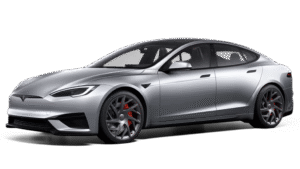

At EV Reviver, we provide advanced Tesla battery diagnostics across all models. Module-level battery repair is currently available for Model S and Model X, where pack architecture allows targeted component restoration.
For other models, we help determine the most effective repair or replacement path based on your battery’s condition.
Reliable EV Solutions
The cost difference between full battery replacement and targeted Tesla battery repair isn’t small—it’s often the difference between a $15,000 and $20,000 expense and restoring your battery for a fraction of that cost.
At EV Reviver, we specialize in Tesla battery repair—fixing failed modules so you can avoid full battery replacement.
Tesla Service Centers typically default to full battery replacement—often costing $15,000 to $20,000 or more. This approach replaces the entire pack, even when only a small portion of the battery has failed.
At EV Reviver, we take a diagnostic-first approach—focusing on the exact source of failure instead of replacing the entire pack.
Most Tesla battery issues can be traced to a single degraded module affecting overall performance. By isolating and repairing that component, we restore the battery without unnecessary replacement. A typical Tesla battery repair includes:
This approach allows us to repair the battery at a fraction of the cost of full replacement.
Because we focus only on what’s actually failed, Tesla battery repair costs are significantly lower than full replacement.
Module-level repairs at EV Reviver typically start from $2,500, depending on the number of affected modules and battery configuration. For current offers and detailed pricing, visit our promotions page.
In many cases, over 90% of the battery pack is still fully functional.
A single weak module can trigger fault codes like BMS_u018 or BMS_A064, limiting performance across the entire system. Once that module is repaired or replaced, the rest of the battery can return to normal operation. With EV Reviver’s repair process:
Repairing your Tesla battery doesn’t just restore performance—it helps protect your vehicle’s long-term value.
A properly repaired battery with documented service history is far more valuable than a vehicle with unresolved battery faults. Instead of facing a steep resale discount, you retain a vehicle that’s functional, verifiable, and road-ready.
Not sure if your Tesla battery needs repair or full replacement?
Get a diagnostic from EV Reviver and find out exactly what’s causing the issue before committing to a full pack swap.
Discover insightful stories from Tesla owners who placed their faith in our unparalleled battery restoration expertise and experienced remarkable transformations in their vehicles.
EXCELLENTTrustindex verifies that the original source of the review is Google. I am impressed with their team here. Finding a shop that actually understands EV high-voltage systems and software diagnostics—without pushing unnecessary repairs—is rare, but these guys are true specialists. They were fast, honest, transparent with their pricing, and kept me updated. My Model S is running smoothly with zero alert codes now, the job took a little bit longer but was completed well. I paid a fraction of the cost to replace battery in Tesla service center. If need any top-tier EV expertise without dealership prices or endless waiting, this is hands-down the best shop in town.Posted on GoogleTrustindex verifies that the original source of the review is Google. I had to replace LDU with EV REVIVER and Leon gave me good repair cost other than anther repair shop. If someone ask me for repair Tesla, I would recommend EV REVIVER for sure. Thank you Leon.Posted on GoogleTrustindex verifies that the original source of the review is Google. I wish I found this place sooner! Staff was friendly and communicative, service was quick, and it was way more affordable than getting repairs done at a Tesla service center!Posted on GoogleTrustindex verifies that the original source of the review is Google. I brought my 2017 Tesla Model S 100d—Midnight—to EVReviver with an inoperative battery. Before bringing it in, I sent Leon screenshots of the fault codes, and he gave me a clear price range for the repair. Once they had the car, it only took a couple of days to diagnose and fix the issue, turning a nonfunctioning Tesla into a fully operational car again. They stuck to the quoted price with no surprises. Leon and Mitch were both great to work with. Communication was excellent, especially by text when I was busy, and their online dashboard made it easy to follow the car’s progress and make payment. Here are a couple of before-and-after photos—the results speak for themselves. I highly recommend EVReviver to anyone dealing with a Tesla battery issue.Car is alive again and i didn't need to replace a whole High Voltage battery! 172k miles and still kicking!Posted on GoogleTrustindex verifies that the original source of the review is Google. I traveled all the way from Las Vegas to have my 2016 Tesla model X battery replaced at EV reviver spoke with someone at Tesla. They said they could only replace my 90 D battery with another 90 D battery. Leon and his staff were able to put a 100 D battery in my car. I wish I could give Leon an EV reviver more than five stars.Posted on GoogleTrustindex verifies that the original source of the review is Google. Thank you Leon for your quality, integrity, friendly and professional work. I highly recommend this service for anyone who need a battery replacement.Posted on GoogleTrustindex verifies that the original source of the review is Google. Leon and his crew are absolutely incredible, very attentive and sweet, also knowledgeable and explain everything thoroughly. They are super efficient and on the money when it comes to projected time frame and pricing. I was estimated 10k + for something they did for under 4k, the best around in my opinion. Choose EV Reviver!!Posted on GoogleTrustindex verifies that the original source of the review is Google. Had the unfortunate luck of getting a failed HV battery past the warranty. Called multiple 3rd party battery installers and EV reviver beats all of them in pricing and warranty.Verified by TrustindexTrustindex verified badge is the Universal Symbol of Trust. Only the greatest companies can get the verified badge who has a review score above 4.5, based on customer reviews over the past 12 months. Read more
Once you understand the cost difference, the next question is simple: how does Tesla battery repair actually work?
Most Tesla battery issues can be traced back to a single weak module affecting the entire pack.
Using advanced diagnostics, we analyze voltage behavior and thermal patterns across each module to pinpoint the exact component causing the issue. In many cases, fault codes like BMS_u018 or BMS_A064 indicate imbalance within a specific module—capping charging at 50% or triggering a reduced-range warning across all cells.
Instead of replacing the full battery, we isolate the problem and address it directly.
Repairing a Tesla battery requires more than replacing parts—it requires balance.
Each module must operate within a precise voltage range. If a replacement module is not properly matched and calibrated, it can trigger the same imbalance issues that caused the original fault. At EV Reviver, we ensure:
This is what allows the battery to function as a complete, balanced system again.
In many cases, the majority of the battery pack remains fully functional.
A single degraded module can limit the performance of the entire system—triggering reduced range, charging limits, or warning messages. Once that module is repaired or replaced, the rest of the battery can return to normal operation.
One of the most common underlying issues is moisture intrusion.
Over time, seals can degrade, allowing condensation or coolant to reach sensitive components within the battery pack. This can lead to corrosion, electrical imbalance, and fault codes—even when the rest of the battery is structurally sound.
Identifying the root cause is critical to ensuring the problem doesn’t return.
At EV Reviver, the process starts with high-voltage diagnostics—designed to identify the exact source of failure with precision, so you can take the next step with confidence.
REAL-WORLD PERFORMANCE
We’ve transformed over 500 Tesla batteries, extending vehicle life and performance across Orange County. Our precision repairs have saved owners thousands in potential replacement costs.
Trusted expertise diagnosing and resolving complex HV battery issues for Model 3, Y, S, & X.
Save up to half compared to Tesla service centers, with no compromise in quality, safety, or long-term performance.
Finance battery repair & replacement with 0% APR, fast approval, and full parts-and-labor warranty included.
PRECISION YOU CAN TRUST
When it comes to Tesla battery repair, the difference isn’t just cost—it’s approach, transparency, and precision.
At EV Reviver, we don’t default to full battery replacement. We start with voltage analysis, thermal mapping, and comprehensive tesla battery diagnostics and balancing to identify exactly which cell groups are underperforming.
Tesla’s process often feels like a black box. At EV Reviver, you see the data—voltage readings, module performance, and diagnostic results—so you understand exactly what’s happening inside your battery.
Most Tesla battery issues come down to one or two failing modules.
We focus on module-level repair, preserving the rest of your battery and avoiding unnecessary full pack replacement.
Tesla battery systems operate at 350–400V, requiring specialized tools and experience. EV Reviver works specifically with Tesla high-voltage systems—this isn’t general auto repair.
Replacing an entire battery pack when most of it still works creates unnecessary waste. Our approach preserves functional components and restores performance without discarding what’s still good.
We stand behind our work with flexible warranty options on completed repairs—so you get the coverage you need without overpaying. Learn more on our warranty page.
Lower prices, transparent diagnostics, and exceptional customer satisfaction – get your Tesla back on the road with confidence.
$8K - $13K
Full repair or rebuild
Flexible (12 - 36 months)
Available across SoCal
Available
$10K - $15K
Partial repair options
Fixed, often extra cost
Limited coverage
Limited
$15K - $20K
Replacement only
Fixed & restrictive
Not available
Limited
Featured Pricing
Lower prices, transparent diagnostics, and exceptional customer satisfaction – get your Tesla back on the road with confidence.
$8K - $13K
Full repair or rebuild
Flexible (12 - 36 months)
Available across SoCal
Available
$10K - $15K
Partial repair options
Fixed, often extra cost
Limited coverage
Limited
Starting At
$15K - $20K
Replacement only
Fixed & restrictive
Not available
Limited
Tesla Service Centers typically offer full battery replacement with factory-backed warranty coverage and standardized processes. However, their approach is largely replacement-based, meaning a fault code often results in a full pack swap—regardless of whether the issue is isolated to a single module.
In many cases, this means replacing an entire battery when only one component has actually failed.
Independent EV specialists like EV Reviver take a diagnostic-first approach. Using high-voltage testing, voltage analysis, and thermal mapping, we identify the exact source of failure within the battery.
Most Tesla battery issues—especially fault codes like BMS_u018 or BMS_A064—can often be traced back to a single degraded module affecting overall performance. Instead of replacing the entire pack, we focus on targeted Tesla battery repair, restoring the system at its source.
The right solution depends on what’s actually happening inside your battery—not just the presence of a fault code.
In many cases, over 90% of the battery pack is still fully functional, and a proper Tesla battery diagnostic can determine whether repair is a viable and more cost-effective option compared to full replacement.
At EV Reviver, we believe in repairing what’s failed, not replacing what’s still working.
Precision diagnostics help us restore performance when possible and guide you to the right solution when it’s time for replacement.
Same-day diagnostics for Tesla High-Voltage Batteries, with fast scheduling and no-obligation quotes.
Serving Orange County, Los Angeles County, and all of Southern California.
Get answers to common questions about Tesla battery repair and costs
In the United States, Tesla battery module-level repair typically ranges from $4,000 to $7,000, depending on how many modules need replacement, the battery pack generation, and labor.
At EV Reviver, module-level repair for Model S and Model X starts at $2,500, depending on the condition of the battery and the scope of work required.
Compared to full battery replacement—often $15,000 to $20,000+—module-level repair is a more cost-effective solution that targets the actual issue and restores performance without unnecessary expense.
Not sure what your Tesla battery needs? Get a diagnostic from EV Reviver and find out the most cost-effective solution before committing to a full replacement.
Yes, a single degraded module can significantly impact the entire battery pack’s performance. When one module experiences issues, such as a cell imbalance, it can cause the BMS to throttle the system, reducing the overall efficiency and range of your Tesla.
This often results in fault codes and charging restrictions. By addressing the specific module at fault, you can restore the pack’s performance without replacing the entire assembly, preserving both functionality and value for your vehicle in the U.S. market.
Module-level repairs are typically more time-efficient than full replacements. Depending on the complexity of the issue and the availability of replacement modules, repairs can often be completed within a few days.
At EV Reviver, battery repair for a Model S or Model X typically takes 2–3 days for a single module and 4–5 days for multiple modules, depending on the scope of work.
In contrast, a full battery replacement might take longer due to the need for sourcing a new pack and performing comprehensive recalibration. By opting for targeted repairs, you not only save time but also minimize vehicle downtime—helping you get back on the road faster.
While you may still be able to drive your Tesla with a battery fault code, it’s not advisable to ignore it. These codes often indicate underlying issues that could worsen over time, potentially leading to reduced performance or even safety risks. Promptly addressing fault codes through diagnostics and module-level repairs can prevent further damage and ensure your vehicle remains safe and reliable on U.S. highways and city streets.
A Tesla battery pack that has undergone module-level repair can have a lifespan comparable to a new pack, depending on driving habits and maintenance. Properly repaired packs can restore your vehicle to near-original performance levels, offering several years of reliable service.
At EV Reviver, our repair process is backed by flexible warranty options, giving you added confidence in your battery’s long-term performance. Regular maintenance and monitoring can further extend the lifespan, making module-level repair a sustainable and cost-effective choice for Tesla owners across the United States.
Want to understand how long your Tesla battery can last after repair? Get a diagnostic from EV Reviver and explore the right repair and warranty options for your vehicle.
Tesla’s warranty typically covers full-pack replacements but may not extend to module-level repairs performed outside their service centers. At EV Reviver, our flexible warranty options are designed to protect your repair and give you long-term peace of mind. Explore your warranty options and choose the coverage that fits your Tesla.
Opting for module-level repair instead of a full battery replacement significantly reduces environmental impact.
Repairing only the faulty modules conserves valuable resources like lithium, cobalt, and manganese, which are integral to battery production. This approach minimizes waste and supports sustainable practices, aligning with the broader goals of reducing the carbon footprint and preserving the environment for future generations in the United States.